
Camera gear comparison
Monopods for Mobile Camera Support
A monopod can support part of a camera's weight while you keep control of its position. It is not a freestanding substitute for a tripod. Choose the deployed height, packed size, mounting arrangement and foot configuration for the way you will hold and move the complete kit.
Our comparison uses captured listing specifications and attributed customer summaries, not hands-on tracking, vibration or load tests. The camera, lens and attached accessories all belong in the fit and balance check. A headline load figure does not establish that an off-center setup will be steady.
Our Pick for straightforward pole support: Amazon Basics 67-inch
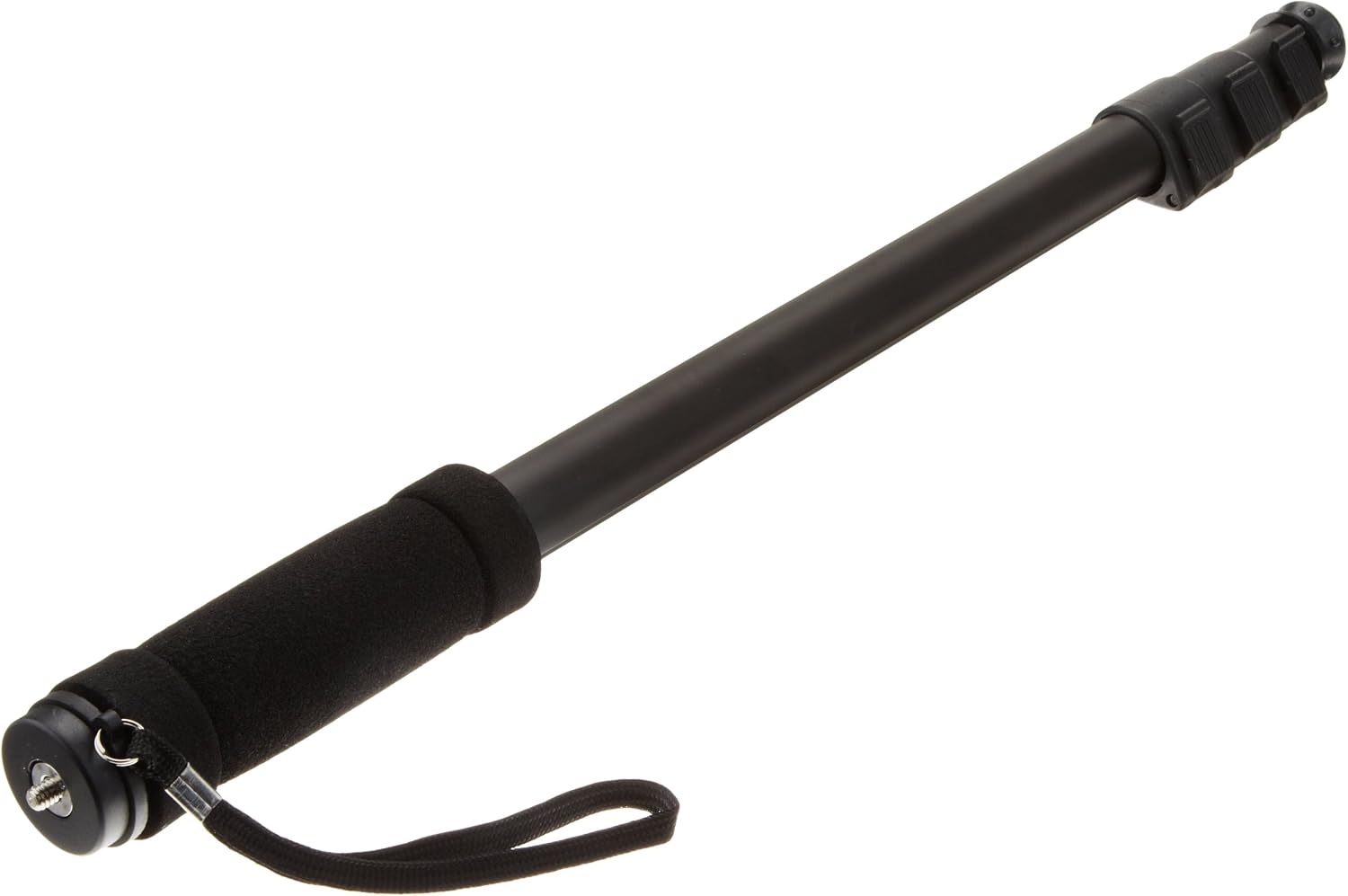
The listing specifies a four-section aluminum monopod extending to 67 inches, weighing 15.7 ounces, with collapsed dimensions of 1.7 x 1.6 x 21.4 inches. A 1/4-inch threaded mount, cushioned grip, adjustable wrist strap and carrying bag are listed. The original product photo shows an exposed mounting screw rather than a separate articulating head.
Consider this design if you want a straightforward pole and can work with its mounting arrangement. Check whether you need a separately compatible head or lens support for the intended camera orientation. The listed 6.6 lb capacity is a limit to consider, not evidence of measured steadiness.
A rubber foot and retractable spike are listed, but we do not turn that into an anti-slip guarantee. Follow the maker's instructions and the rules of the surface or venue. Keep active control of the monopod at all times.
Amazon’s Customers say summary describes portability, low weight and basic functionality positively. That is attributed feedback, not a measured steadiness result or universal DSLR compatibility finding. The captured summary does not establish the balance of drawbacks, long-term durability or warranty service; we leave those conclusions out.
NEEWER with detachable base: folding-feet configuration
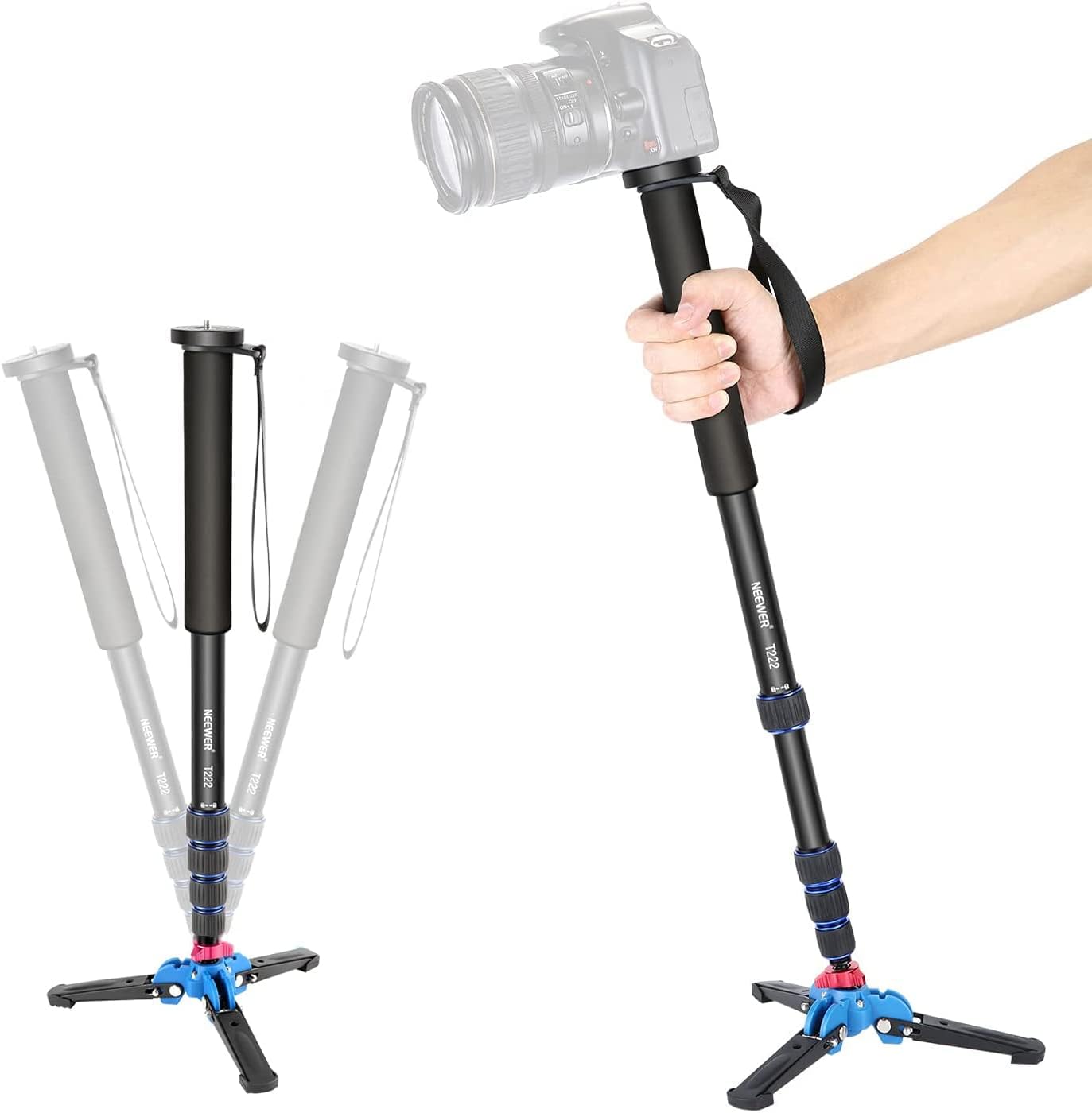
The captured listing specifies a five-section aluminum monopod extending to 66 inches / 168 cm and folding to 20.5 inches / 52 cm. It lists a 1/4-inch top screw, a 3/8-inch bottom threaded hole and a detachable three-leg folding base. The original product photo shows a T222 marking on the pole.
Its base is the main configuration difference, not a promise of hands-free use. The listing expressly says to hold the monopod with one hand when a camera is mounted, otherwise it can fall and damage the camera. Preserve that instruction even though the product image shows small feet. The stated tilt and rotation of the base do not establish that an articulating camera head is included.
Mass was not established in the captured fields, so we do not call it lighter than another option. The listed 11 lb / 5 kg load is not a vibration test. Amazon’s Customers say summary praises portability and adjustability but reports mixed steadiness and concerns about feet unscrewing and falling off. Those reports materially qualify the folding-base option. They are not a measured failure rate, and they reinforce rather than replace the listing’s one-hand support warning. No warranty outcome is established.
Koolehaoda MP-286C: carbon-fiber mounting alternative
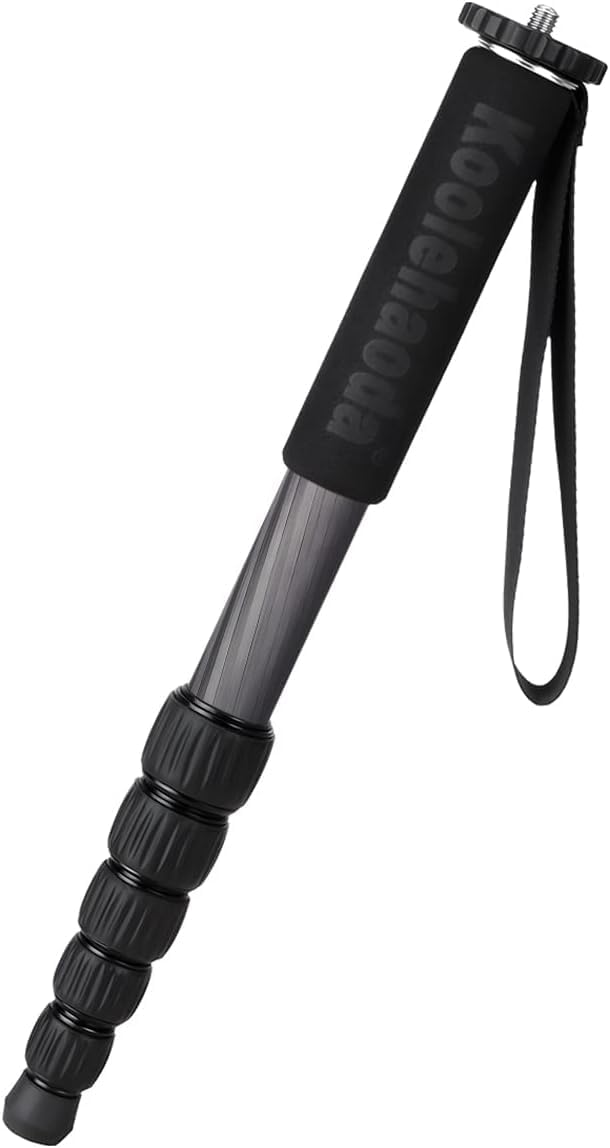
The feature text identifies the MP-286C and specifies a 15–62-inch height range, six sections and a 650 g / 1.43 lb mass. Its listed mounting arrangement uses reversible 1/4-20 and 3/8-16 screws, with a 3/8-inch bottom thread for a separately compatible base. The original image shows a pole with twist collars and an exposed screw, not a separate articulating head.
Its stated maximum height is lower than the other two candidates, and its listed mass is greater than the Amazon Basics pole. The 15-inch figure is presented as the lower end of the adjustment range, not a separately verified folded measurement. We therefore do not rank packed length from that number. Confirm the full assembly size with any head you add.
We do not adopt the listing’s promises about vibration damping, weather sealing, rapid setup or heavy-telephoto suitability. The 10 kg / 22 lb load claim is not a measured stability result. Nor do we recommend the monopod as a walking aid or an overhead boom from broad marketing copy. Amazon’s Customers say summary is brief and positive about sturdiness and basic functionality. One reported camera-and-lens example does not establish suitability for another kit. The summary is too narrow to establish a balanced drawback assessment, long-term durability or warranty service, so those conclusions remain unasserted.
Quick comparison
| Model | Listed height / folded length | Listed mass | Mounting or foot distinction |
|---|---|---|---|
| Amazon Basics 67-inch | 67 in maximum / 21.4 in collapsed | 15.7 oz | 1/4-inch top screw; rubber foot and retractable spike listed |
| NEEWER with folding base | 66 in maximum / 20.5 in folded | Not established | Detachable folding feet; explicit one-hand support warning |
| Koolehaoda MP-286C | 15–62 in listed range | 650 g / 1.43 lb | Reversible screw sizes; six sections |
The figures come from the captured listings, not independent measurements. Exact head inclusion and complete camera/lens fit must be checked separately.
Check the whole support chain
- Compare deployed height with the camera's viewing position, not your height alone.
- Include any separate head, plate and lens support in the setup dimensions and load.
- Confirm screw thread, engagement and clearance rather than relying on “universal” in a title.
- Inspect the section locks and foot configuration using the maker's instructions.
- Keep the monopod under active control, including versions with small auxiliary feet.
Which monopod fits the task?
For a straightforward camera pole with an explicit 67-inch maximum height, stated mass and 1/4-inch mount, start with the Amazon Basics option. It is our narrow pole-support pick, not a stability winner or a hands-free support. Choose the NEEWER only if the folding-base configuration is useful and its support warning and loose-foot reports are acceptable for your use. Compare the Koolehaoda when its listed mounting interfaces and carbon-fiber construction suit the setup, without treating its load claim as measured heavy-lens performance.
Check any separate head and the complete kit before use. The evidence does not establish durability, warranty outcomes or universally compatible mounts.